

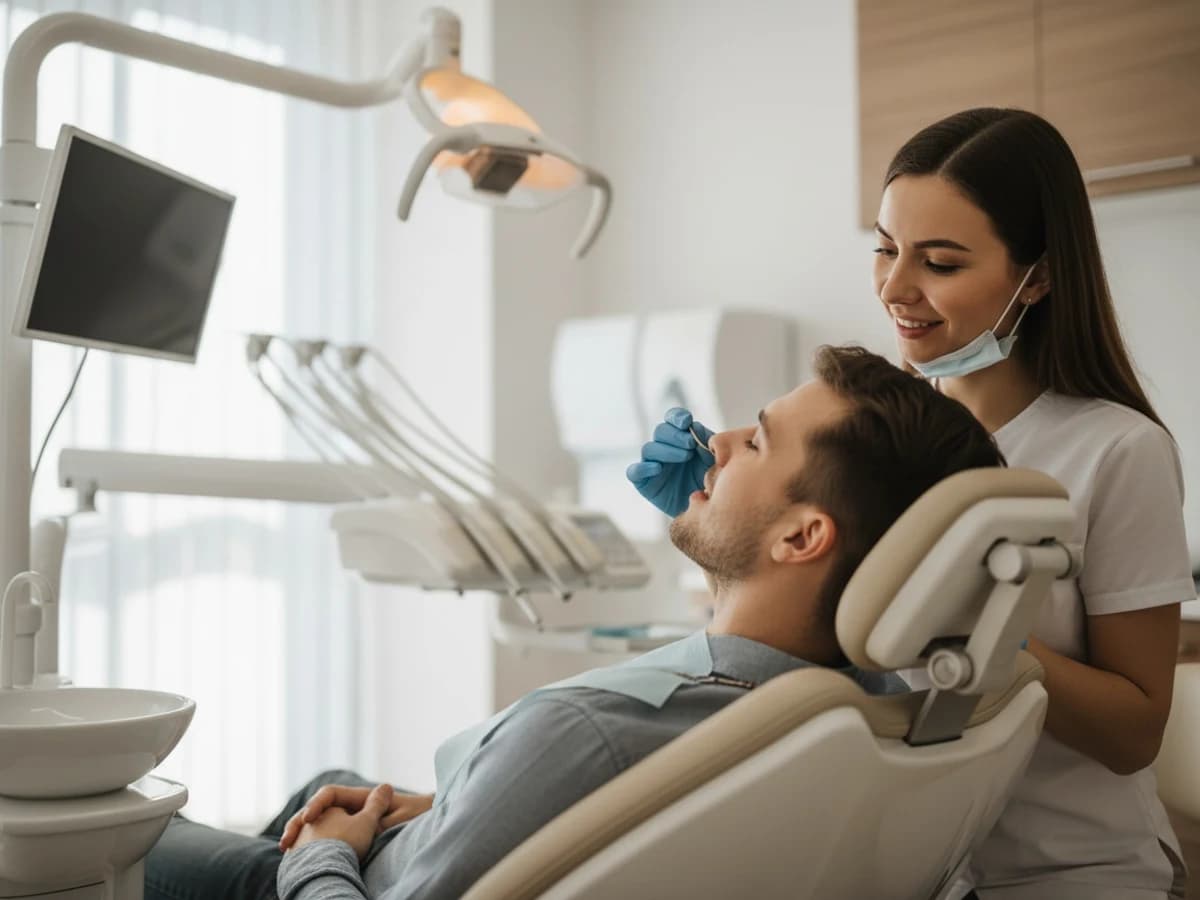
What is a Hollywood Smile Makeover?
A Hollywood Smile is a customized, multi-step cosmetic and restorative treatment plan designed to deliver a bright, harmonious and durable smile that suits your face, lip dynamics and personality. Rather than a single procedure, a Hollywood Smile combines interventions such as whitening, veneers, crowns, bonding, orthodontics and implants as needed to correct color, shape, alignment, gaps and missing teeth. At Dentsun International we plan each makeover to balance aesthetics with long-term oral health.
Step-by-step procedure
The process is organized into clinical phases so patients know what to expect. Typical timing for a full Hollywood Smile is about 6–8 weeks, although cases involving implants or extended orthodontics can take several months.
- Phase 1 – Comprehensive assessment (Week 1)
Clinical exam, full-mouth photographs, X-rays and, when indicated, CBCT. We use digital smile design (DSD) software to create a visual mock-up. Bring reference photos of smiles you like—this helps refine shape and color goals.
- Phase 2 – Preparatory treatments (Weeks 1–3)
Begin professional teeth whitening first to set the desired shade for any restorations. Address gum health with scaling, and perform minor orthodontic alignment with clear aligners if needed. Laser gingival contouring is offered for gummy smiles.
- Phase 3 – Restoration design & fabrication (Weeks 2–5)
After planning, your veneers, crowns or implant crowns are designed with CAD/CAM and forwarded to the laboratory. Options include feldspathic porcelain, lithium disilicate, high-translucency zirconia and composite resin depending on aesthetic and strength needs.
- Phase 4 – Tooth preparation & impressions (Weeks 2–3)
Conservative enamel preparation (typically 0.3–0.7 mm for veneers), local anesthesia when required, then digital or conventional impressions. Temporary restorations protect teeth and aesthetics while the final work is crafted.
- Phase 5 – Try-in & permanent bonding (Weeks 5–6)
Try-in verifies fit, contacts and shade; occlusion is checked for centric and lateral movements. Bonding uses enamel etching, appropriate silane/hydrofluoric surface treatment of porcelain, and a quality resin luting agent with careful isolation. Final curing and occlusal polishing complete the appointment.
- Phase 6 – Final adjustments & follow-up (Week 6–8)
Minor occlusal refinements, polishing, and a post-op review to ensure tissue health and patient comfort. We schedule periodic maintenance visits thereafter.
Materials and when we use them
- Feldspathic porcelain: Highest translucency for ultra-aesthetic anterior veneers; excellent light transmission but more brittle.
- Lithium disilicate (e.g., e.max): Strong and very aesthetic—favored for anterior and some posterior veneers and crowns.
- Zirconia: Extremely durable for patients with heavy wear or bruxism; newer formulations are increasingly translucent.
- Composite resin: Conserves tooth structure and can be repaired chair-side; best for temporary or cost-conscious corrective work.
- Implant-supported crowns: Titanium or zirconia implants with ceramic crowns for missing teeth—requires staged surgical planning and osseointegration time.
What to expect during bonding
Reliable long-term results depend on meticulous bonding technique. Typical protocol includes selective enamel etching with phosphoric acid, appropriate hydrofluoric acid etching and silanization of ceramic surfaces, application of adhesive, thin uniform resin cement and controlled curing. Proper isolation and margin management greatly reduce the risk of debonding and secondary caries.
Recovery and downtime
Most patients experience minimal downtime. Expect transient sensitivity or mild gum tenderness for a few days after preparation and cementation. Avoid very hot or cold foods in the first 24–48 hours if sensitivity is present. Because the procedure is primarily restorative rather than surgical, patients return to work and normal activities immediately in nearly all cases.
Aftercare: habits that extend longevity
- Daily gentle oral hygiene: soft-bristled brush and daily flossing; consider an electric toothbrush for consistent technique.
- Avoid heavy biting on hard objects (ice, pens, shellfish) and using teeth as tools.
- Limit staining foods and beverages (coffee, tea, red wine) and avoid smoking.
- If you clench or grind, wear a professionally made night guard to protect restorations.
- Regular professional reviews: 6-month recalls and annual checks on margins and occlusion.
Who is an ideal candidate?
Good candidates are adults with stable oral health—no uncontrolled decay or active gum disease—and sufficient enamel for bonding. Realistic expectations and commitment to maintenance are essential. Patients with significant malocclusion may need orthodontic pre-treatment; those with missing teeth may require implant planning that extends the timeline. Our team at Dentsun International will evaluate candidacy during the initial consultation and outline the best, evidence-based approach for your specific needs.
Risks and how we manage them
Common, generally minor issues include transient sensitivity and soft tissue irritation. Rarer complications include chipping, debonding or shade mismatch. We mitigate risks through careful case selection, conservative preparation, digital planning (DSD), laboratory quality control, and strict bonding protocols. For patients with bruxism, we recommend durable materials (lithium disilicate or zirconia) and a protective night guard.
Next steps
If you’re considering a Hollywood Smile, request a consultation with Dentsun International to begin with a thorough assessment and digital smile preview. A clear, personalized treatment plan with a realistic timeline and maintenance guidance will help you achieve a beautiful, lasting smile with confidence.


